Fire Safety in Council Buildings: A Practical Guide for Facility Managers

Fire Safety for Council Facilities and Local Authorities is a continuous responsibility.
Fire Safety in Council Buildings: A Practical Guide for Facility Managers is more than a reminder of regulations. It is a call to treat fire safety as a continuous responsibility that shapes how every council property is managed—from offices and leisure centres to community halls and housing estates. Effective fire safety goes beyond meeting legal standards. It creates environments where people feel protected and where systems work reliably, day after day.
Facility managers play a central role in achieving that. They balance legislative duty, operational pressure, and public accountability across complex, often ageing estates. This guide draws on real experience supporting councils nationwide, offering practical insight into keeping fire safety compliant and sustainable.
What Fire Safety Compliance Really Involves
Legislation sets the standard, but compliance depends on consistent application. Many councils manage hundreds of properties of different ages and layouts, making it easy for standards to drift.
The most effective fire safety systems treat compliance as an everyday process, not a one-off goal. Routine inspections, planned maintenance, and clear communication all feed into one transparent framework. This structure makes evidence easy to locate, simplifies audits, and helps prevent minor risks from becoming major issues.
Councils that embed regular communication and transparent reporting find long-term savings and stronger control over risk. Prevention always costs less than correction.
Keeping Fire Doors and Compartmentation Reliable
Fire doors and compartmentation slow the spread of fire and smoke, buying crucial time for evacuation and emergency response. Their effectiveness depends entirely on regular inspection and prompt repair.
Every fire door should close fully, seal tightly, and display the correct certification label. Minor defects, like a missing intumescent strip or loose hinge, can invalidate performance. The same principle applies to compartment walls, ceilings, and floors. Service penetrations or damaged firestopping can quickly compromise a building’s design integrity.
Treat these systems as active defences, not static fittings. Schedule routine inspections, record all findings, and repair issues immediately. Councils that keep this cycle running consistently maintain compliance and reduce future liability.

Well-maintained emergency lighting provides safe evacuation routes in all council buildings.
Managing Fire Detection and Emergency Lighting
Detection and lighting systems form the second core of fire protection. They alert occupants, guide evacuation, and provide the clearest proof of compliance.
Effective management combines daily awareness with professional maintenance. Site staff should perform weekly visual checks, ensuring alarms sound correctly and emergency lighting illuminates. Qualified engineers should complete formal servicing and certification at defined intervals.
Log every check, even when no fault is found. Consistent records build a trustworthy maintenance history and demonstrate control to insurers and auditors.
Upgrading old systems can also bring measurable benefits. Interconnected alarms, self-testing lights, and energy-efficient fittings reduce downtime, energy use, and the risk of system failure.
Coordinating Fire Safety Across Multiple Sites
Most councils manage widespread estates, where the most significant risk lies in inconsistency. A lapse in one smaller site can expose the entire authority to scrutiny.
A centralised approach solves this. Shared schedules, standardised reports, and unified oversight ensure that all properties meet the same standard. Local site teams can still manage day-to-day checks, but everything feeds into one coordinated system.
In our work with local authorities, we have seen that success depends on open communication. When departments share information, act quickly on inspection results, and review performance, fire safety becomes a shared responsibility rather than an isolated task.
Balancing Budget Pressures and Fire Safety Standards
Every local authority faces financial limits. Yet improved fire safety does not always mean higher spending. The most cost-effective results come from smarter coordination and preventative maintenance.
Combining site visits, aligning inspection schedules, and consolidating supplier contracts saves time and money. Early identification of minor faults, such as damaged seals or worn closers, prevents expensive remedial works later.
Training frontline staff to recognise early warning signs adds further protection at minimal cost. Councils that take a planned, preventative approach often see the strongest long-term financial results.
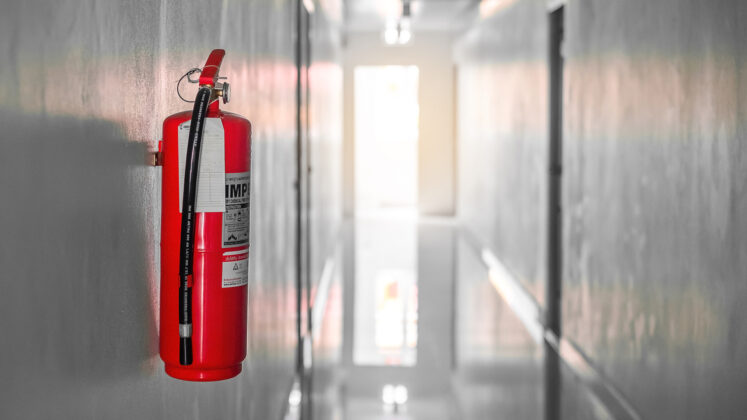
Coordinating fire safety. Log every check, even when no fault is found.
Using Documentation to Strengthen Confidence
Strong documentation is one of the most evident signs of competent management. It turns technical compliance into transparent accountability.
Record every inspection, test, and repair in a consistent format and store the information easily. Digital systems simplify tracking, highlight overdue tasks, and instantly make information available to auditors.
Accurate records do more than satisfy legislation. They support budget planning, reveal trends, and provide valuable evidence during reviews or investigations. Hedingham Contracts often helps councils simplify these processes so teams can focus on action rather than paperwork.

Consistent communication between departments keeps multi-site fire safety programmes aligned and accountable.
Building Awareness and Shared Responsibility
Fire safety depends as much on people as it does on systems. Without awareness, even the best technology cannot prevent risk.
Regular briefings, signage, and quick refresher sessions keep safety in mind. Everyone, from caretakers to senior managers, should know evacuation routes, alarm points, and who to report faults to.
Clear instructions for visitors in public buildings also help reduce confusion during emergencies. The aim is to make safety instinctive, not procedural.
Preparing for Audits and External Inspections
Councils work under constant public and regulatory oversight. Inspection visits are not a disruption; they are part of maintaining accountability.
The most confident facility managers view audits as opportunities to confirm that systems work as intended. Keeping maintenance logs current, storing certificates safely, and reviewing previous reports regularly make the process smoother.
Auditors look for evidence of active management, not just paperwork. Councils that demonstrate a proactive inspection, action, and review cycle show control rather than compliance under pressure.
Creating Safer Communities Through Consistent Action
Fire safety in public buildings succeeds when small, consistent actions add up to lasting protection. When staff communicate clearly, inspections stay on schedule, and repairs happen promptly, compliance becomes the natural result of good management.
Every test, every repaired hinge, and every logged inspection contribute to community safety. The goal is confidence in daily practice, knowing that every council building stands ready to protect its occupants.
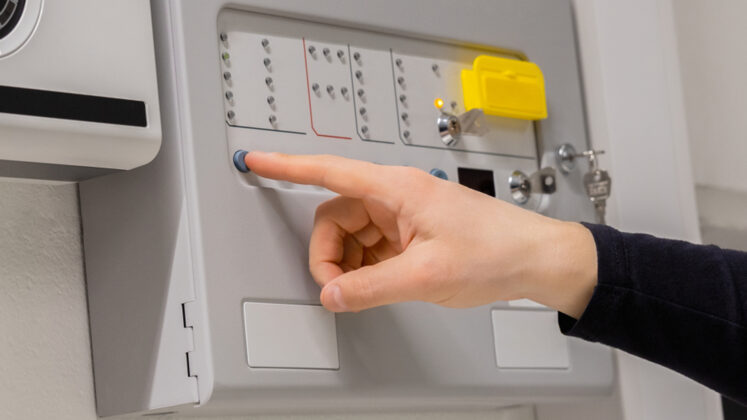
Routine testing of fire detection systems ensures early warning and a reliable evacuation response.
A Trusted Partner for Councils and Facility Managers
Hedingham Contracts works alongside local authorities to deliver practical, dependable fire safety management. Our team supports councils across the UK with inspections, maintenance programmes, and long-term compliance planning.
We believe effective fire safety is not about doing more, it is about doing the right work, consistently and with professional guidance every step of the way.
Key Takeaways
- Treat compliance as an ongoing process, not a one-off task
- Prioritise inspection quality and timely action
- Coordinate safety systems through central oversight
- Train staff at every level to recognise and report risks
- Use digital documentation for clarity and control
- Combine efficiency with prevention to manage budgets responsibly
- Prepare continually for audits, not reactively
Frequently Asked Questions
What are the main legal requirements for council fire safety?
Councils must comply with the Regulatory Reform (Fire Safety) Order 2005, ensuring that all premises have suitable fire risk assessments, maintained protection systems, and trained responsible persons.
How often should fire doors be inspected in council buildings?
The minimum industry recommendation is every six months, though higher-risk or high-traffic sites often require quarterly checks.
Can digital record systems replace paper logbooks?
Yes, provided they are secure, regularly backed up, and accessible to authorised personnel. Digital systems often improve accuracy and speed up audits.
What is the most common cause of non-compliance with fire safety in councils?
Inconsistent inspection routines and incomplete documentation are the most frequent issues, especially across multi-site estates.
How can councils reduce fire safety costs without lowering standards?
Coordinating maintenance across departments, training staff to recognise early defects, and focusing on prevention rather than reactive repairs.
 VideoandWeb.com