Fire Safety Upgrades for Older Buildings
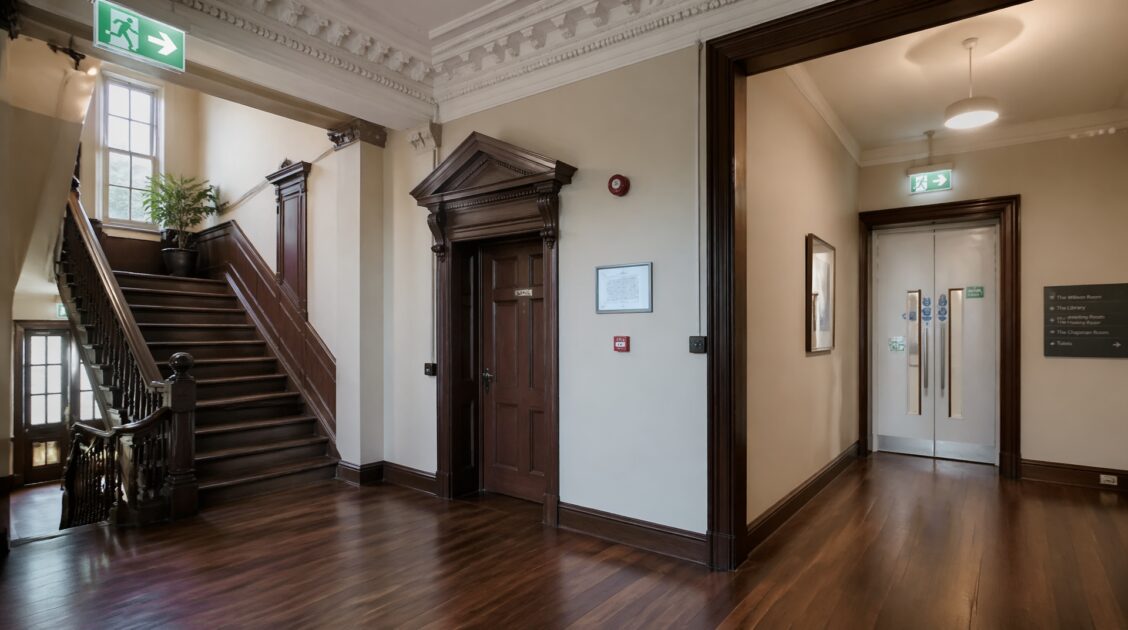
Older buildings require carefully planned fire safety upgrades that respect structure while improving protection.
Fire Safety Upgrades for Older Buildings sit high on the agenda for anyone responsible for established properties. If you manage an older building, you already know it brings character, complexity, and a set of risks that newer sites often avoid. The question is not whether upgrades are needed, but how to approach them in a way that protects people, respects the structure, and meets current standards.
Older buildings rarely fail because of a single issue. Risk tends to build through a combination of outdated systems, undocumented alterations, and gradual wear. A focused upgrade programme brings clarity, control, and confidence.
Why older buildings need a different approach
Age affects how a building behaves in a fire. Materials, layouts, and services often differ from those used in modern construction. You might find hidden voids, legacy wiring routes, or compartmentation that no longer performs as intended.
Over time, refurbishments can introduce further complexity. A wall moved here, a door changed there, and a service route added without proper sealing. Each change can weaken the building’s ability to contain fire and smoke.
We approach older properties with careful surveying and clear communication. The aim is to understand how the building works today, not how it looked on the original drawings. From there, upgrades can become targeted and proportionate.
Current fire risk assessment
Every upgrade programme begins with a robust fire risk assessment. This assessment provides a current picture of hazards, occupancy, and existing controls.
In older buildings, assessments often reveal gaps between what should be in place and what actually exists. Missing fire doors, damaged seals, non-compliant glazing, or incomplete records are common.
A well-written assessment does more than list issues. It prioritises actions, explains risk, and sets a practical route forward. That clarity prevents reactive spending and supports a structured plan.
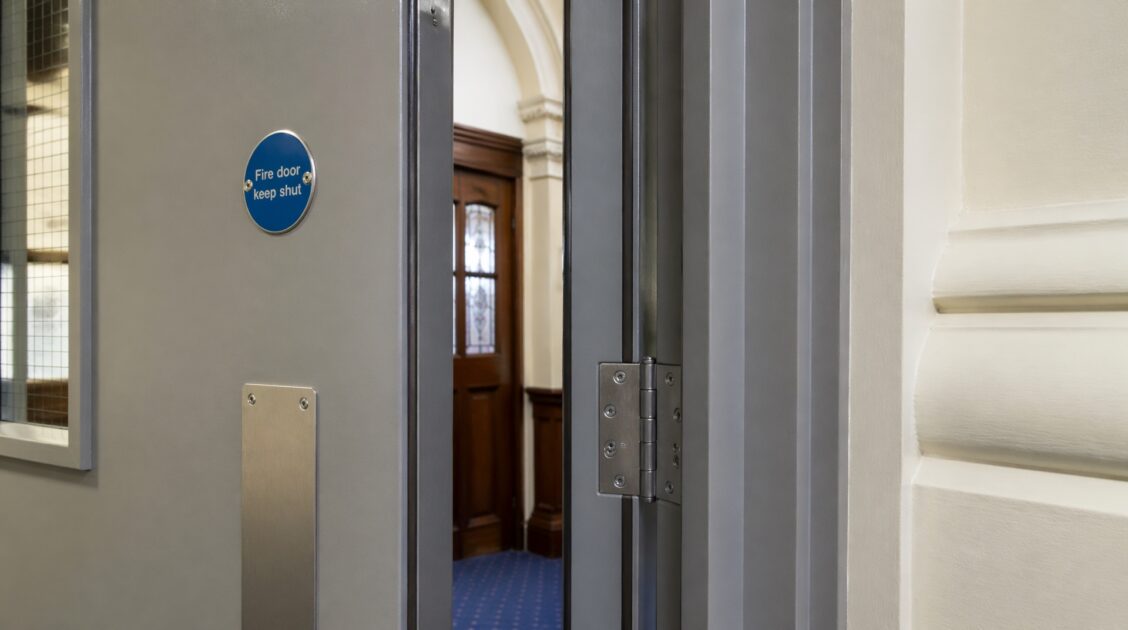
Fire doors must be correctly fitted and maintained to prevent the spread of fire and smoke.
Fire doors that perform as intended
Fire doors form a critical line of defence. In older buildings, they often present the most visible and the most overlooked problems.
Common issues include poor fitting, missing intumescent strips, damaged frames, and incompatible hardware. Even a small gap can allow smoke to spread quickly, undermining the whole system.
Upgrading fire doors does not always mean wholesale replacement. In many cases, skilled remediation can bring existing doors back to standard. Where replacement makes more sense, certified doors with correct installation and documentation provide assurance.
We inspect, repair, and install fire doors with a focus on performance in use, not just appearance.

Effective compartmentation prevents fire and smoke from spreading through hidden gaps.
Compartmentation that contains fire and smoke
Compartmentation divides a building into fire-resistant sections. In older properties, this protection often suffers from years of untracked changes.
Service penetrations, ceiling voids, and risers often lack effective fire-stopping. A single unsealed gap can allow fire and smoke to bypass protected areas.
Upgrading compartmentation involves detailed surveys, identification of breaches, and the installation of tested fire-stopping systems. The work requires care and documentation, especially where access is restricted.
Restoring compartmentation transforms how a building responds during a fire, slowing the spread and supporting safe evacuation.
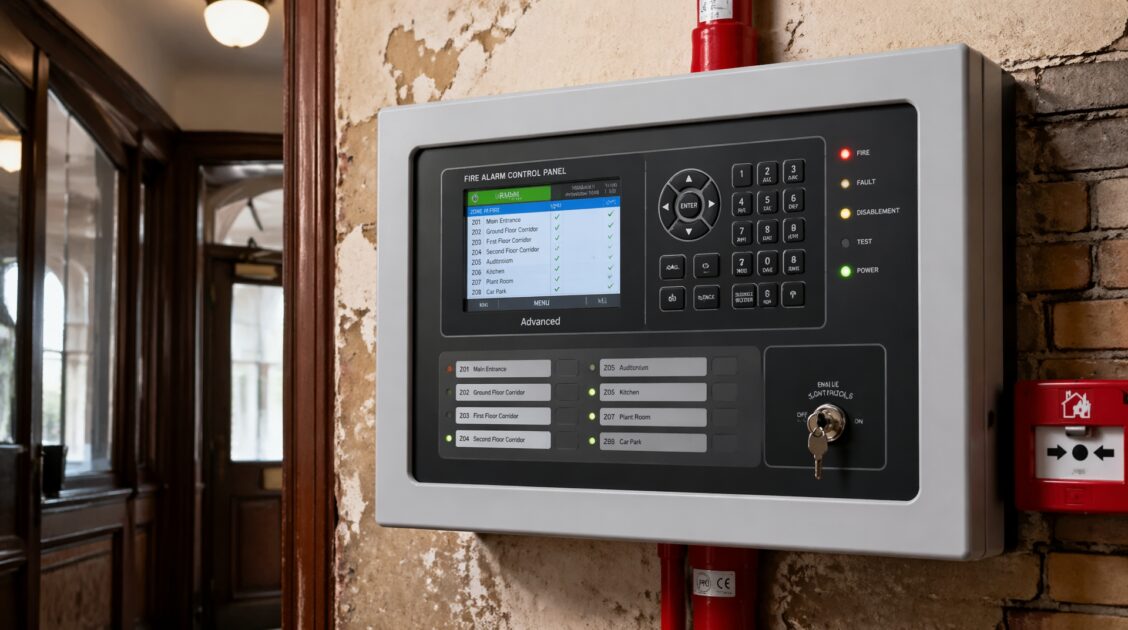
Modern detection systems provide faster alerts and clearer response guidance.
Detection and alarm systems that match current use
Fire detection systems in older buildings often fall short of current expectations. You may find outdated panels, limited coverage, or systems that no longer reflect the building’s current use.
Upgrades focus on improving detection speed, coverage, and reliability. Modern systems provide clearer alerts, better zoning, and improved integration with other safety measures.
The goal is simple. Ensure occupants receive timely warning and understand how to respond.
Emergency lighting that supports safe escape
During a power loss, emergency lighting becomes essential. In older buildings, lighting systems may be incomplete, poorly maintained, or incorrectly positioned.
Upgrading emergency lighting ensures escape routes remain visible and usable. Installation areas include corridors, stairwells, and changes in level. Regular testing and clear records support ongoing compliance and confidence.
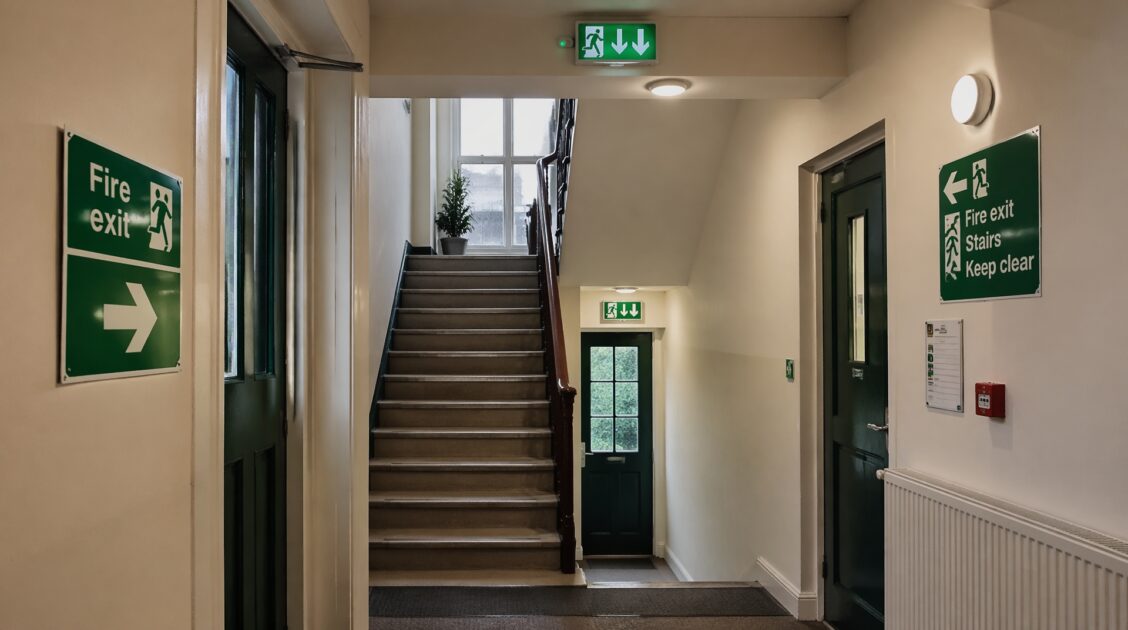
Emergency lighting ensures safe evacuation when visibility is reduced.
Managing passive and active systems together
Fire safety works best when passive measures and active systems support each other. Fire doors, compartmentation, and structural protection form the backbone. Detection, alarms, and lighting provide the response.
In older buildings, these elements often evolve at different times. Bringing them together into a coordinated system improves performance and reduces gaps.
We look at the building as a whole, aligning upgrades so they work together rather than in isolation.
Balancing safety with building character
Older buildings often carry architectural or heritage value. Upgrades must respect that character while still meeting safety requirements.
Sensitive detailing, careful material choice, and thoughtful installation help achieve both aims. With the right approach, safety improvements can be integrated without compromising the building’s look or feel.
Planning upgrades without disruption
Many older buildings remain fully operational during upgrade work. Offices continue to run, residents remain in place, and services must stay live.
Phased work, clear communication, and careful scheduling reduce disruption. This practical planning often determines how successful a project feels to the client. Our approach focuses on steady progress, clear updates, and minimal interruption.
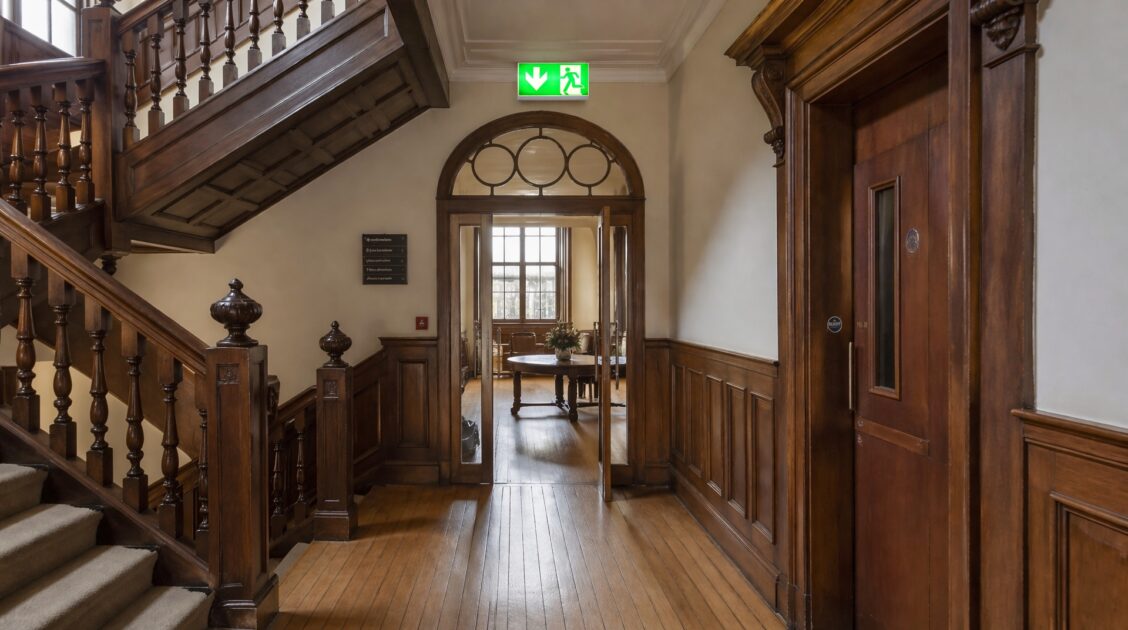
Fire safety upgrades can be integrated carefully to protect people while preserving the character of older buildings.
Building confidence through documentation
Documentation underpins every successful upgrade. Certificates, inspection records, and installation details provide evidence of compliance and support future management.
In older buildings, records often start incomplete. Upgrades offer a chance to reset that position and create a clear, reliable audit trail. Readdressing this issue supports compliance and makes future maintenance far easier.
How often should fire safety systems be reviewed?
Fire safety systems should be reviewed at least once a year as part of a formal fire risk assessment, but in practice, different elements require more frequent checks to remain effective and compliant.
Routine inspections usually follow a structured pattern. Weekly checks are often required for fire alarm systems to confirm they activate correctly. Emergency lighting typically requires monthly functional tests and an annual full-duration test. Fire doors and compartmentation benefit from periodic inspections, often every 6 months or sooner in high-use environments.
Changes within the building should always trigger an immediate review. Alterations to layout, new service installations, changes in occupancy, or refurbishment work can all affect how fire protection performs. Even small changes can introduce gaps in compartmentation or impact escape routes.
Higher-risk environments, such as healthcare settings, large public buildings, or sites with vulnerable occupants, often require more frequent and detailed reviews. In these cases, ongoing monitoring and documented checks form part of daily or weekly operational routines.
A simple way to think about it is this. The formal review happens annually, but the system itself should be actively checked and maintained throughout the year. That ongoing attention is what keeps the building safe and ensures compliance withstands scrutiny.
A practical way forward
Fire safety upgrades in older buildings do not need to feel overwhelming. With a clear assessment, a structured plan, and the right support, improvements become manageable and effective.
At Hedingham Contracts, we work with clients across commercial, public-sector, and complex environments to upgrade fire safety in ways that make sense for each building. The focus stays on protecting people, strengthening compliance, and delivering work that stands up to scrutiny.
Frequently Asked Questions
Do older buildings need to meet current fire safety standards?
Older buildings must meet current fire safety requirements regarding risk management and the protection of occupants. While the structure may not meet modern construction standards, control measures must provide an equivalent level of safety.
Can existing fire doors be upgraded instead of replaced?
Many existing fire doors can be repaired and upgraded if they are structurally sound. Assessment determines whether remediation or replacement offers the safest and most cost-effective outcome.
What is the most common issue in older buildings?
Compartmentation breaches appear frequently. Unsealed service penetrations and hidden voids often allow fire and smoke to spread beyond intended barriers.
How disruptive are fire safety upgrades?
With careful planning, upgrades can be phased to reduce disruption. With clear communication and scheduling, buildings can remain operational during most work.
How often should fire safety systems be reviewed?
Fire safety systems should be reviewed at least once a year as part of a formal fire risk assessment, but different elements within the system require more frequent checks to remain effective.
 VideoandWeb.com